
TECHNOLOGY
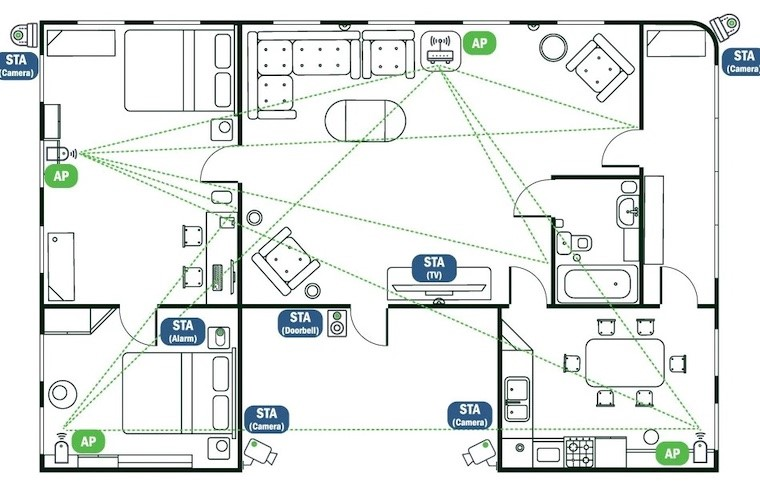
Wi-Fi Sensing is a new technology which enables motion detection, gesture recognition as well as biometric measurement by using existing Wi-Fi signals. Wi-Fi Sensing operates similarly to a radar system, detecting motion and providing information that can be used to enable new Wi-Fi based services. It builds upon the existing standards, hardware, infrastructure, and deployments of Wi-Fi. Wi-Fi Sensing creates opportunities within the home security, health care, enterprise, and building automation/management markets, among many others.
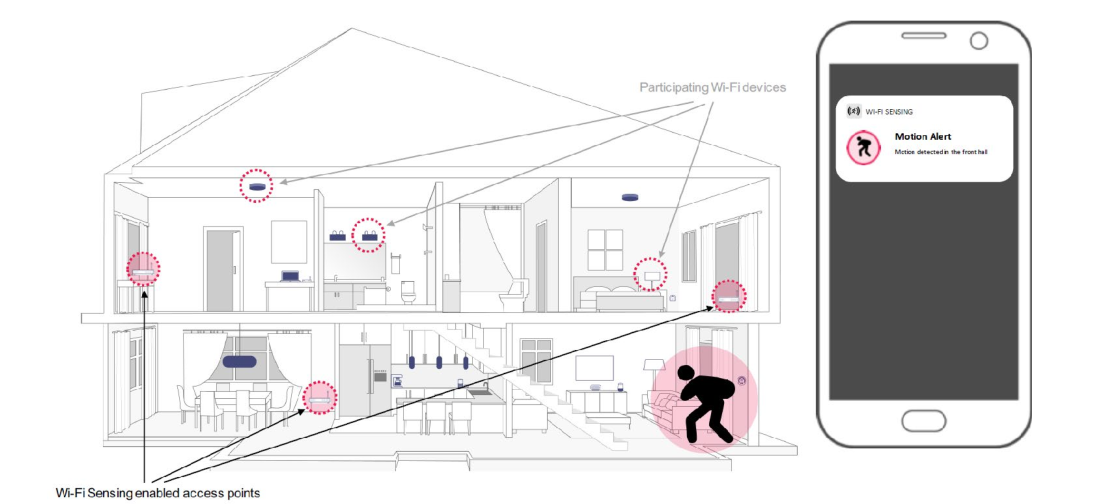
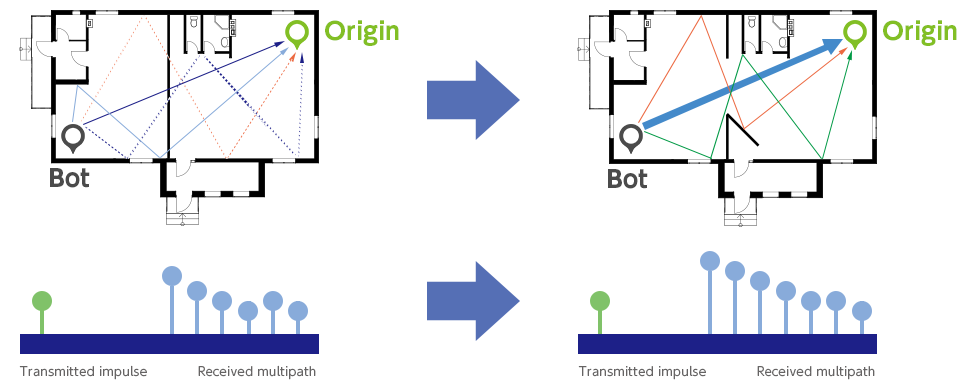
In Wi-Fi Sensing, radio information obtained during signal processing is used to detect environmental changes caused by motion of objects, pets and people. In many cases, the primary information extracted from the radio for Wi-Fi Sensing is the channel frequency response and/or the received signal strength. Computing this quantity is a typical function of any Wi-Fi receiver, as it enables a mechanism to compensate for the distortion introduced by the wireless channel. Wi-Fi Sensing builds upon these mechanisms, allowing Wi-Fi device perform sensing and learn about changes in the environment.